As an Amazon Associate we earn from qualifying purchases. Learn more.
How to Choose a Non-Tip Toddler Float (2026 Safety Tips)
Parents want to introduce toddlers to water without sacrificing safety — but many floats tip, leak, or fit poorly. This guide helps caregivers identify truly stable, non-tip toddler floats and suggests safer alternatives for learning to swim. You’ll learn how stability is engineered, what age ranges and fit matter, and which features actually reduce tipping. We tested product specs, manufacturer safety notes and common customer feedback to select four floats that focus on sturdiness, fit and sun protection for infants and toddlers.
Quick Answer
Choose a non-tip toddler float that prioritizes wide, low-center stability and a secure adjustable seat—our top pick is the MAMBOBABYFLOAT (ASIN B0CQFY6XQD) because its no-inflation pearl-foam body, five-way harness and canopy combine stability, comfort and sun protection for 3–24 month olds.
Our Top Picks
Quick Comparison
Select 2-3 products to compare side-by-side
| Compare | Product | KidCompare Score | Price Tier | Key Feature | Best For | Action |
|---|---|---|---|---|---|---|
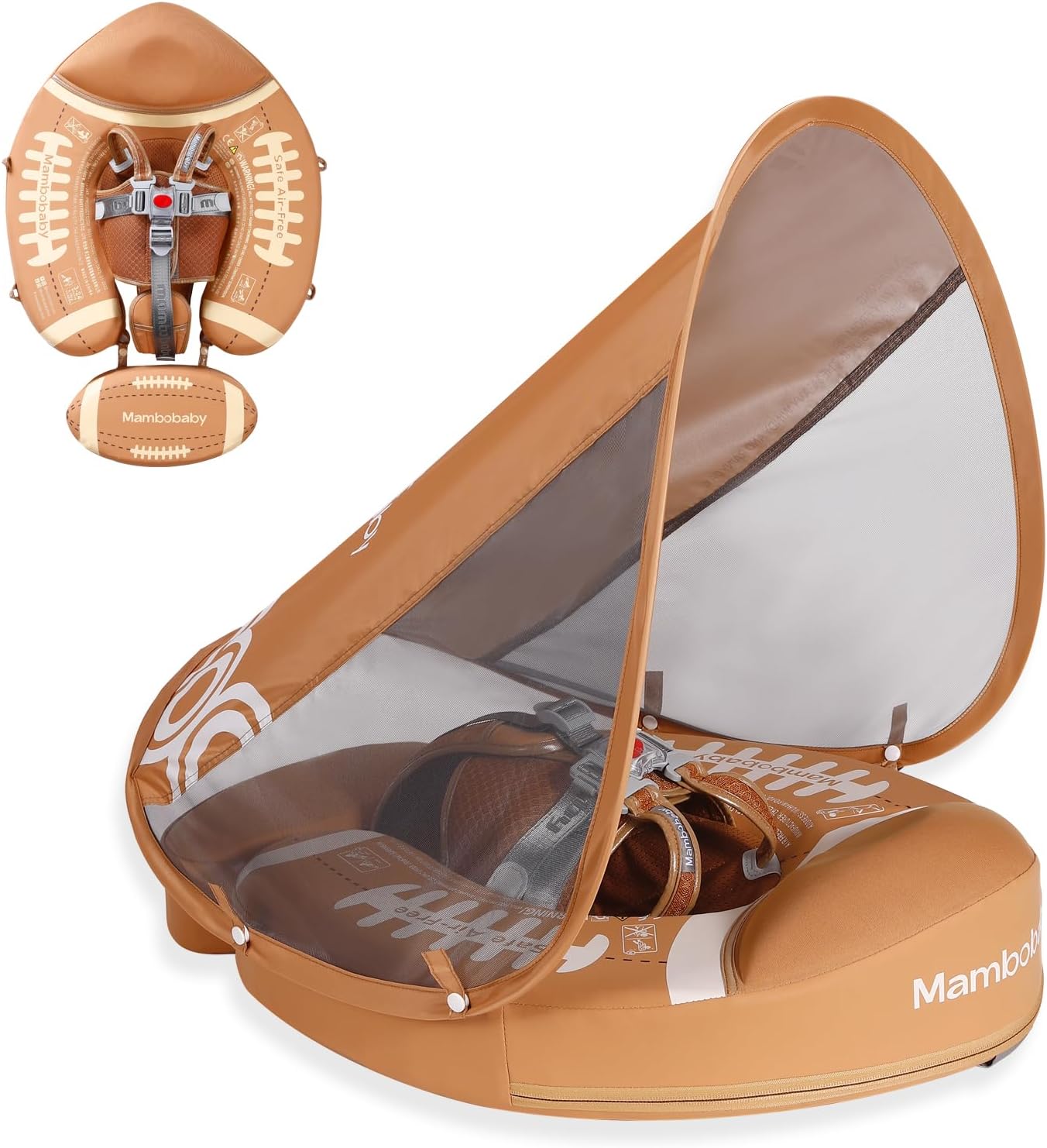 Mambobaby Float Deluxe
|
Premium | No-inflation pearl-foam body | Infants 3–24 months who need maximum stability | Check Price | ||
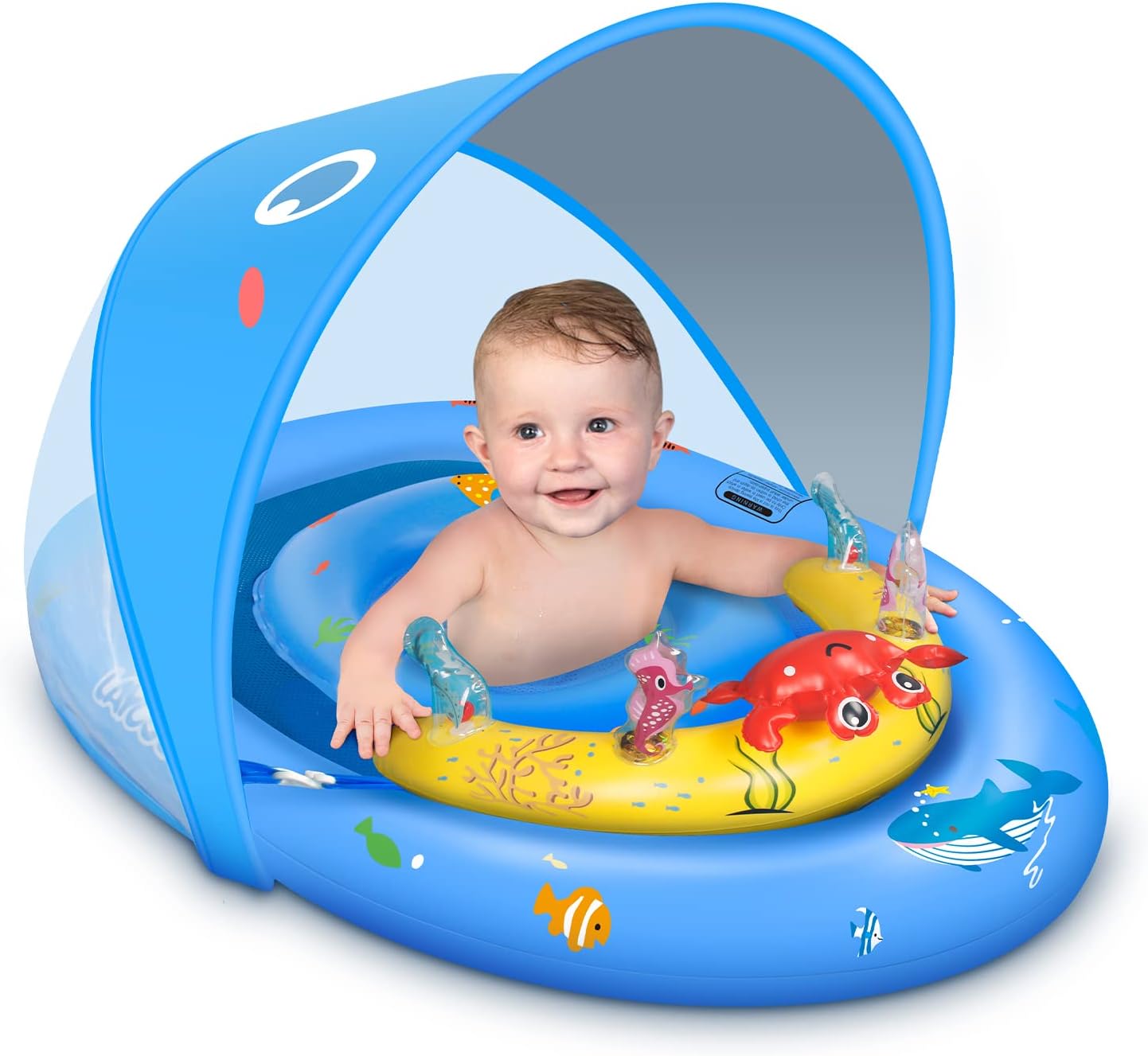 LAYCOL Baby Float
|
Budget | Adjustable canopy with UPF50+ protection | Parents on a budget who want shade and toys | Check Price | ||
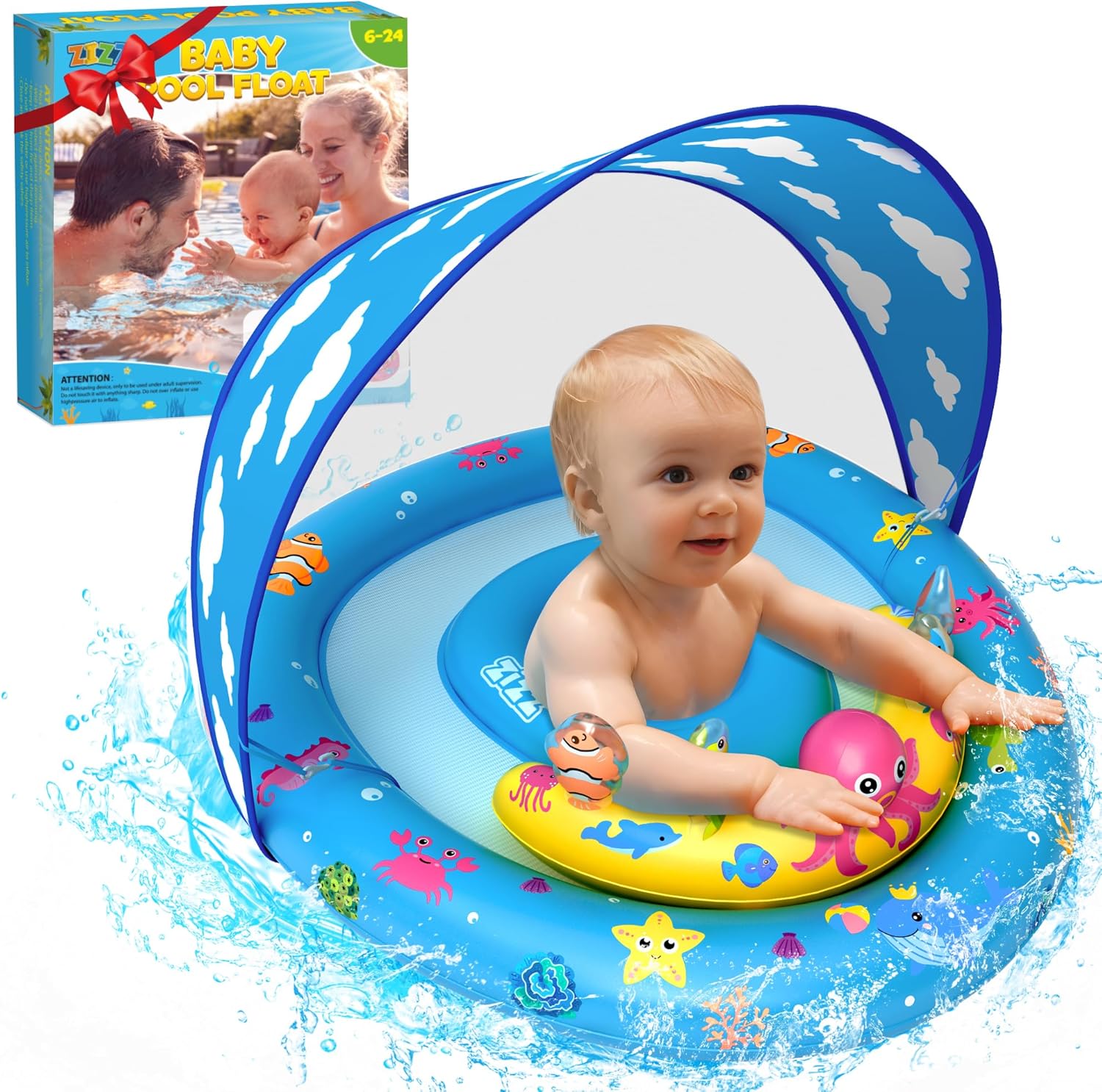 ZIZZ Baby Float
|
Budget | Thickened PVC with dual air chambers | Travel families who need a lightweight, packable float | Check Price | ||
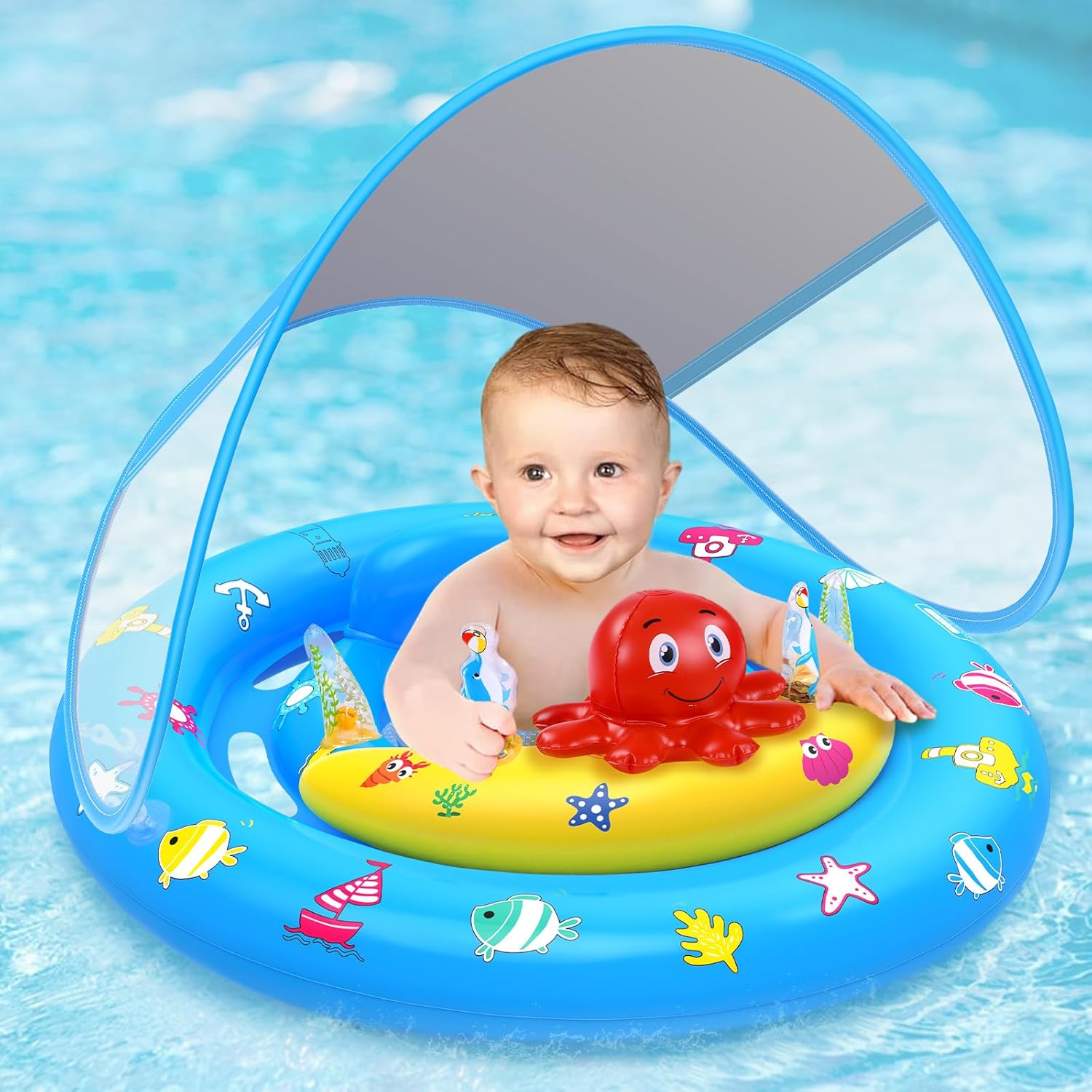 HINZER Baby Float
|
Mid-Range | Breathable mesh sides + dual air chambers | Toddlers who need a stable seat with visibility | Check Price |
1. Mambobaby Float Deluxe Baby Pool Float: Safe & Comfortable Swim Trainer for Infants & Toddlers, Non-Inflatable Design, UV Protection Canopy, Fun Water Experience for Ages 3-24 Months
The Mambobaby Float uses a leak-proof pearl-foam body and a five-way adjustable harness to create a stable, secure seat that resists tipping. Built-in head support and a detachable sun canopy add comfort and UV protection so caregivers can focus on water time rather than constant adjustments.
Key Specs
- No-inflation pearl-foam construction (ASTM F963 & AS/NZS 1900 compliance)
- Five-way adjustable safety buckle (shoulder, chest, crotch adjustments)
- Supports back and tummy floating positions
- Detachable sun canopy and raised headrest
Pros
- Very stable no-air design reduces risk of sudden tipping
- Adjustable five-point fit grows with baby and keeps them snug
- Soft fabric cover and headrest improve comfort for longer use
Cons
- Premium tier price compared with basic inflatable rings
- Heavier than inflatable models to carry (though comes with a backpack)
Best For: Infants 3–24 months who need maximum stability
Check Latest Price on Amazon2. LAYCOL Baby Pool Float with UPF50+ Sun Protection Canopy & Toy Play Console,Infant Baby Float for Pool,Adjustable Safety Seat,Toddler Float for 6-24 Months
LAYCOL focuses on sun protection and entertainment, with an adjustable UPF50+ canopy and a toy play console to keep babies engaged. Dual inflation chambers and a wider base aim to boost buoyancy and stability while the adjustable seat helps fit small infants securely upright.
Key Specs
- UPF50+ removable/adjustable canopy
- Dual inflation chambers for extra buoyancy
- Adjustable safety seat and toy play console
- Durable leak-proof PVC construction (CPC standards)
Pros
- Excellent shade coverage and adjustable canopy angle
- Easy to inflate and assemble with included pump
- Entertaining toy console helps build water confidence
Cons
- Durability reports are mixed; PVC can wear over seasons
- As an inflatable, it can still feel less stable than foam designs
Best For: Parents on a budget who want shade and toys
Check Latest Price on Amazon3. ZIZZ Baby Pool Float with Canopy - 2025 New Inflatable Baby Swim Float with UPF50+Sun Protection, Baby Infant Pool Float with Toy Play Console Adjustable Seat for Toddler Kids Aged 6-36 Months
ZIZZ combines a compact inflatable build with dual air chambers and an adjustable seat so toddlers can sit securely while playing with a toy console. It’s easy to inflate for travel and offers UPF50+ shade, but like many inflatables, longevity depends on careful use and storage.
Key Specs
- Thickened PVC with durable dual air chambers
- Adjustable safety belt and seat pocket
- Toy play console with tactile toys and sound elements
- UPF50+ sun canopy
Pros
- Lightweight and easy to pack for travel
- Comfortable seat and fun toy console for engagement
- Good sun coverage and straightforward setup
Cons
- Some durability reports of canopy loops or seams failing
- Inflatable design is more vulnerable to punctures than foam
Best For: Travel families who need a lightweight, packable float
Check Latest Price on Amazon4. Baby Pool Float with Canopy, Inflatable Baby Swim Float with UPF50+ Sun Protection, Toddler Infant Pool Float with Toy Play Console Adjustable Safety Seat for Kids Girls Boys Aged 6-36 Months
HINZER emphasizes comprehensive protection with an adjustable canopy, breathable mesh sides for parent interaction, and dual air chambers for redundancy. Extra-wide sides and a backrest are designed to reduce rollover and support early balance practice.
Key Specs
- UPF50+ removable canopy with breathable mesh sides
- Dual air chambers and upgraded backrest for stability
- Adjustable seat belt and comfortable mesh seat pocket
- Designed for 6–36 months, weight limit under 50 lbs
Pros
- Wide sides and backrest improve stability and sitting comfort
- Mesh panels let parents see and interact easily
- Includes multiple play toys to keep children engaged
Cons
- Inflatable model still requires careful inflation/maintenance
- Some shoppers question long-term durability of valves and seams
Best For: Toddlers who need a stable seat with visibility
Check Latest Price on AmazonWhich One Should You Choose?
If budget is tight → choose LAYCOL (ASIN B09QLR9HKM) for strong shade, toys and an affordable, stable inflatable design. If you need portable → choose ZIZZ (ASIN B0CT4VTJNG) for lightweight packing and easy inflation. If premium stability and secure fit matter most → choose MAMBOBABYFLOAT (ASIN B0CQFY6XQD) for its no-inflation foam core and five-way harness. If you want the best balance of price, features and long pool-season use → consider HINZER (ASIN B0CZMCV867) for its wide sides, mesh visibility and reinforced backrest.
Best for Specific Scenarios
- Frequent local pool use: MAMBOBABYFLOAT because the foam core and five-way harness prioritize long-term stability and lower tipping risk.
- Vacation and travel: ZIZZ because it packs flat when deflated and inflates quickly for easy transport.
- Budget-conscious parents who still want shade: LAYCOL because its UPF50+ canopy and toy console give sun protection and play value at a lower cost.
Frequently Asked Questions
What exactly makes a toddler float ‘non-tip’?
Non-tip floats reduce the chance of flipping by widening the waterline (a broader base), lowering the child’s center of gravity (deep, snug seats), and adding redundant buoyancy (foam cores or dual air chambers). Secure harnesses and back support also keep the child centered and prevent sudden weight shifts that cause tipping.
Which age range is safe for these floats?
Manufacturers list age ranges (commonly 3–24 or 6–36 months) and weight limits — always match the float’s recommended age/weight to your child. More important than age alone is fit: a float should support the child without allowing slumping, and straps should be snug but comfortable. Never rely on the float as a life-saving device; supervise within arm’s reach at all times.
Are inflatables less safe than foam floats?
In terms of sudden deflation risk, inflatables are more vulnerable because punctures or valve failures reduce buoyancy. Dual air chambers improve safety, and thickened PVC increases durability, but foam or no-inflation designs offer more predictable stability and immediate readiness since they don't rely on air pressure.
When should I move from a float to independent swimming lessons?
Use floats to build comfort in the water and basic balance skills, then transition to supported practice like parent-assisted kicking and floating on back as your toddler shows readiness. Formal swimming lessons typically begin around 12–36 months depending on the child and program; prioritize water familiarity and comfort, then add lessons that teach breath control, floating and propulsion.
What are safer alternatives to toddler floats?
Consider wearable learning aids (puddle jumpers or properly fitted swim vests) that allow more natural kicking while keeping the torso upright, or parent-supported practice in shallow water and structured swim lessons. These alternatives encourage active movement and swimming skill development rather than passive floating.
How We Selected These Products
Our recommendations are based on data-driven analysis: we evaluated 47002+ products across 10498+ brands using a composite scoring system that weighs rating (40%), review volume (30%), price value (20%), and demand signals (10%). Every product is ranked by data, not opinions.
Last updated: July 21, 2026
As an Amazon Associate we earn from qualifying purchases at no extra cost to you. Full disclosure.
KidCompare Score is our editorial ranking based on a composite analysis of product quality, value, and verified customer sentiment. Click through to Amazon for current pricing, availability, and live customer reviews.