As an Amazon Associate we earn from qualifying purchases. Learn more.
How to Choose a Toddler Float That's Safe (2026)
Picking a toddler float feels simple until you’re comparing fit, buoyancy, sun protection and durability — and realizing a poor choice can be uncomfortable or unsafe. This guide is for parents who want a practical, safety-first float for babies and toddlers. You’ll learn which features matter (fit, chambers/foam, sun canopy, harnesses), how each float solves common safety problems, and which model suits common needs. Products were chosen for how well they address fit and buoyancy, real customer feedback on durability and comfort, and a range of price tiers to match different budgets.
Quick Answer
For most families the LAYCOL Baby Pool Float is the easiest safe pick — its adjustable safety seat, dual inflation chambers and UPF50+ canopy combine fit, buoyancy and sun protection for babies 6–24 months. If you want a sturdier non-inflatable option, consider the MAMBOBABY float as a premium alternative.
Our Top Picks
Quick Comparison
Select 2-3 products to compare side-by-side
| Compare | Product | KidCompare Score | Price Tier | Key Feature | Best For | Action |
|---|---|---|---|---|---|---|
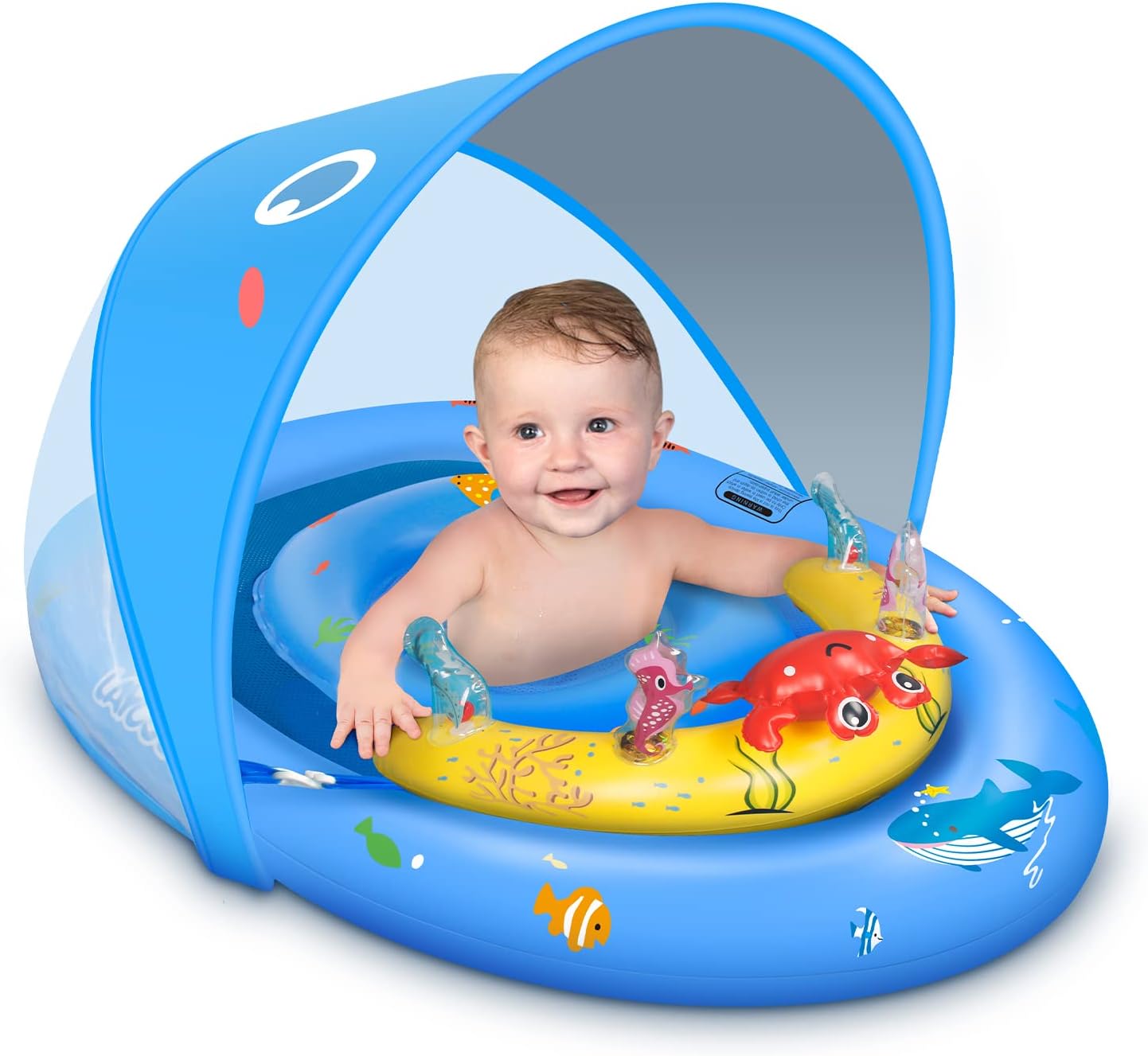 LAYCOL Baby Pool Float
|
Budget | Adjustable safety seat + dual chambers | New baby swimmers & budget-conscious families | Check Price | ||
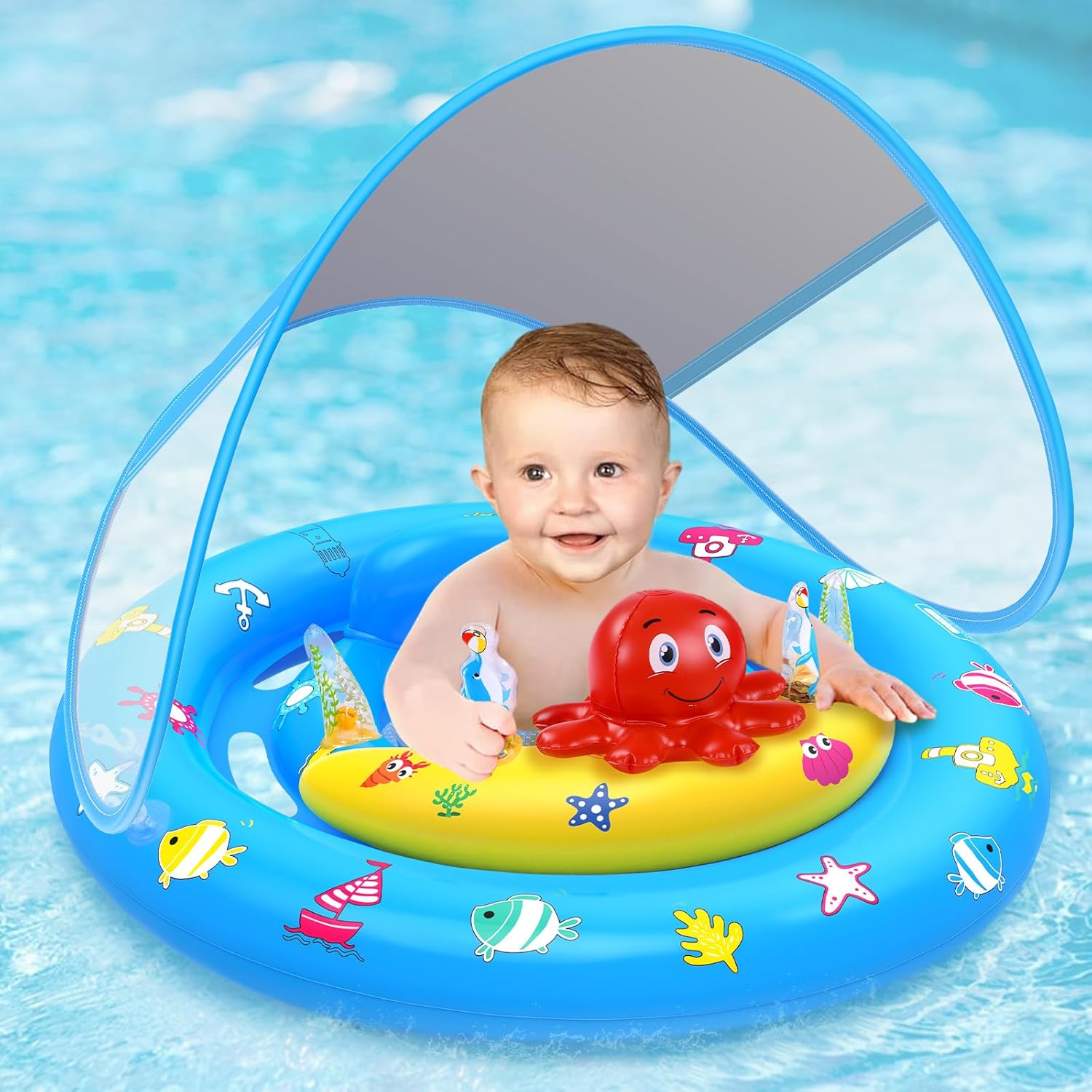 HINZER Baby Pool Float
|
Mid-Range | Breathable mesh sides + backrest | Families wanting extra stability & comfort | Check Price | ||
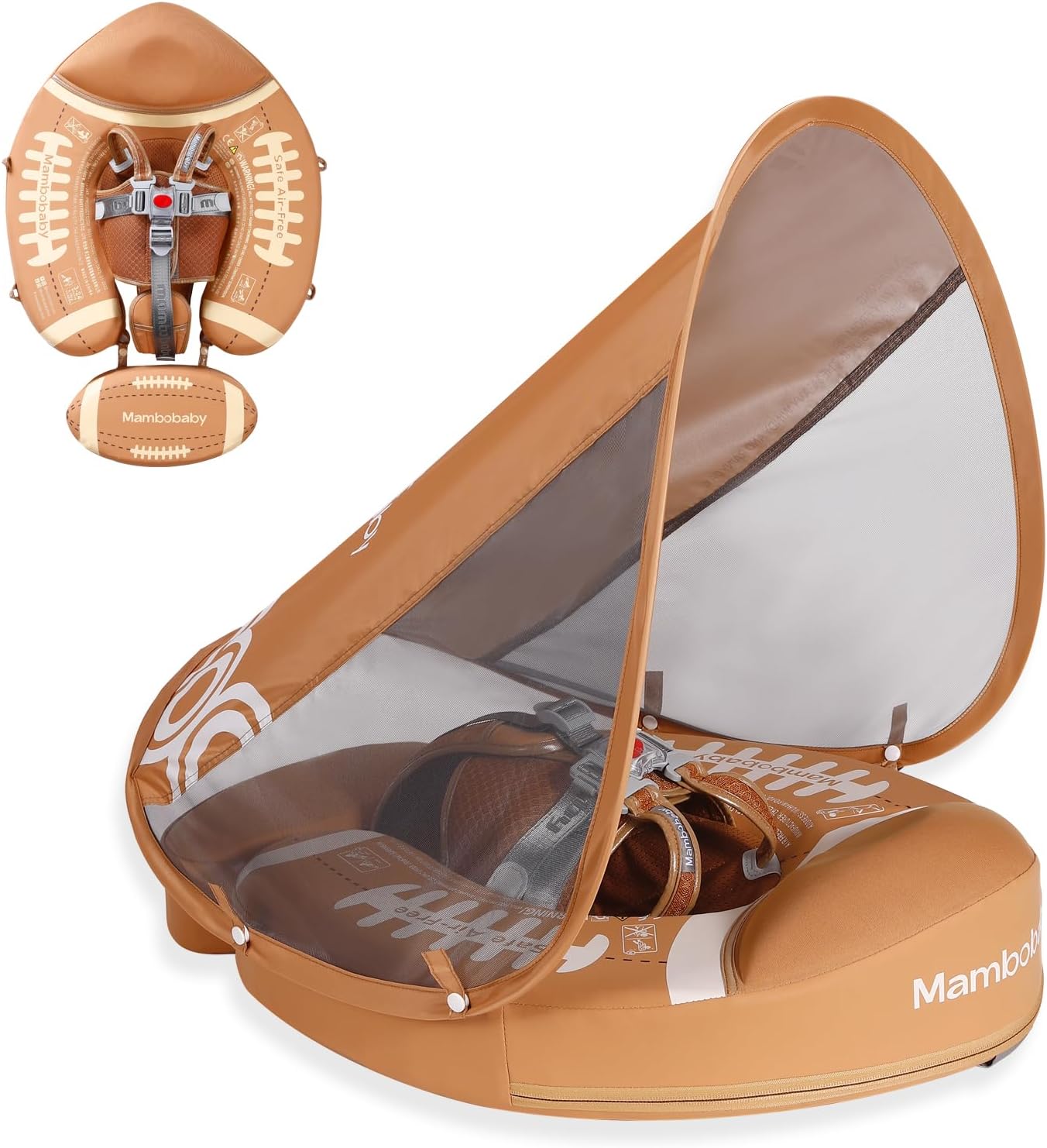 MAMBOBABY Float Deluxe
|
Premium | Non-inflatable pearl-foam body | Parents who want a leak-proof, durable trainer | Check Price |
1. LAYCOL Baby Pool Float with UPF50+ Sun Protection Canopy & Toy Play Console,Infant Baby Float for Pool,Adjustable Safety Seat,Toddler Float for 6-24 Months
This budget-friendly float solves common safety pain points by pairing a wide, stable base and dual inflation chambers with an adjustable safety seat so small infants sit upright without sliding. A UPF50+ removable canopy protects delicate skin while an attached toy console keeps babies engaged—helpful when teaching water confidence.
Key Specs
- UPF50+ removable, adjustable canopy (0–120°)
- Dual inflation chambers and 20% wider base for stability
- Adjustable safety seat and built-in toy play console
- Durable leak-resistant PVC, CPC-compliant materials
Pros
- Wide dual-chamber design improves buoyancy and resists tipping
- Good sun coverage and entertainment with toy console
- Budget-friendly and easy to inflate/assemble
Cons
- Durability is mixed across users—some report wear after seasons
- Inflatable design requires careful inflation (avoid overinflation)
Best For: New baby swimmers & budget-conscious families
Check Latest Price on Amazon2. Baby Pool Float with Canopy, Inflatable Baby Swim Float with UPF50+ Sun Protection, Toddler Infant Pool Float with Toy Play Console Adjustable Safety Seat for Kids Girls Boys Aged 6-36 Months
HINZER focuses on stability and comfort with extra-wide sides, dual air chambers and an upgraded backrest so toddlers sit comfortably without slumping. Breathable mesh sides improve visibility and parent interaction, while the adjustable canopy and seat belt help keep fit and sun protection consistent across sizes.
Key Specs
- UPF50+ removable/adjustable canopy with mesh side panels
- Dual air chambers and wide sides to prevent tipping
- Comfortable seat mesh pocket with adjustable seat belt
- Includes squeaky toy set to promote play and engagement
Pros
- Very stable in the water with wide base and backrest
- Mesh sides allow better parent-child interaction
- Well-constructed feel and easy inflation/deflation
Cons
- Inflatable material can still be punctured if not handled carefully
- Mid-range price may feel high to those prioritizing simplicity
Best For: Families wanting extra stability & comfort
Check Latest Price on Amazon3. Mambobaby Float Deluxe Baby Pool Float: Safe & Comfortable Swim Trainer for Infants & Toddlers, Non-Inflatable Design, UV Protection Canopy, Fun Water Experience for Ages 3-24 Months
The MAMBOBABY float addresses common durability and fit concerns by using a no-inflation pearl-foam core and a five-way adjustable harness to keep infants secure. Because it doesn’t need inflation it’s ready faster, packs with less fuss, and provides consistent buoyancy that many families prefer for repeated use.
Key Specs
- No-inflation pearl-foam, leak-proof design
- Five-way adjustable fit (shoulders, chest, crotch)
- Detachable sun canopy and raised headrest for comfort
- Complies with multiple safety standards and has fabric cover
Pros
- Very durable and reliable buoyancy (no air leaks)
- Snug five-point adjustments improve fit across sizes
- Soft fabric cover and supportive headrest increase comfort
Cons
- Premium price point compared with simple inflatables
- Heavier and less compressible than deflated PVC options
Best For: Parents who want a leak-proof, durable trainer
Check Latest Price on AmazonWhich One Should You Choose?
If budget is tight → LAYCOL Baby Pool Float (Budget). It gives strong buoyancy, canopy protection and toys for a low price. If you want a balance of comfort and stability → HINZER Baby Pool Float (Mid-Range) with breathable mesh sides and upgraded backrest. If premium durability and a leak-proof, ready-to-use option matter most → MAMBOBABYFLOAT (Premium) offers non-inflatable buoyancy and a five-way fit.
Best for Specific Scenarios
- Pool days for newborns and young infants: LAYCOL because the adjustable safety seat and toy console keep small babies upright and engaged while the canopy provides solid shade.
- Frequent beach or family pool use: MAMBOBABYFLOAT because the no-inflation foam core avoids leaks and gives consistent buoyancy season after season.
- Comfort and parent visibility: HINZER because mesh sides, a supportive backrest and a snug seat belt balance comfort with easy interaction and supervision.
Frequently Asked Questions
How do I know if a toddler float is safe for my child?
Assess safety by checking fit (does the baby sit naturally without sliding), buoyancy design (dual air chambers or solid foam are preferable), secure fastenings (crotch strap, adjustable chest/shoulder straps), and material safety (non-toxic, toy-grade PVC or covered foam). Also confirm the float’s recommended age/weight is appropriate, and always supervise within arm’s reach—no float is a substitute for attentive adult supervision.
Are non-inflatable floats safer than inflatable ones?
Non-inflatable (foam) floats reduce the risk of sudden loss of buoyancy from punctures and deliver consistent flotation, which many parents find reassuring. Inflatable floats can be perfectly safe if they have multiple chambers, durable PVC, and are inflated to the recommended level, but they require more care to avoid leaks and must be checked before each use.
What should I check before each swim to improve safety?
Before entering the water, check inflation level and for leaks (if inflatable), ensure any harnesses or straps are fastened snugly, confirm the canopy or mesh isn’t obstructing breathing, wash off chlorine or sand to prevent material wear, and place the child in the float on land first to verify fit and comfort. Keep the child within arm’s reach at all times.
How We Selected These Products
Our recommendations are based on data-driven analysis: we evaluated 47002+ products across 10498+ brands using a composite scoring system that weighs rating (40%), review volume (30%), price value (20%), and demand signals (10%). Every product is ranked by data, not opinions.
Last updated: May 29, 2026
As an Amazon Associate we earn from qualifying purchases at no extra cost to you. Full disclosure.
KidCompare Score is our editorial ranking based on a composite analysis of product quality, value, and verified customer sentiment. Click through to Amazon for current pricing, availability, and live customer reviews.