As an Amazon Associate we earn from qualifying purchases. Learn more.
Balance Bike vs Ride-On vs Scooter: Best First-Wheel Choice (2026 Comparison)
Choosing a first-wheeled toy for a toddler is less about flash and more about motor-skill development, safety, and fit. This head-to-head comparison looks at balance bikes, ride-ons, and scooters through a development-first lens so parents can pick the right starter wheel. We tested and compared three Strider 12 Sport Bike SKUs (same model across different ASINs/images) for adjustability, safety features, ease of assembly, and how well each supports balance, steering, and gross-motor milestones. Read on to see which option suits your child's age, coordination level, and household needs.
Quick Answer
For most toddlers learning balance and steering the Strider 12 Sport Bike (ASIN B00IZXCAQ6) is the best first-wheel choice — it teaches balance faster than ride-ons or scooters and is lightweight, tool-free to adjust, and built for ages 1–4. If you need a lower-priced mid-range option, the other Strider 12 variants are close alternatives with the same core learning benefits.
Our Top Picks
Quick Comparison
Select 2-3 products to compare side-by-side
| Compare | Product | KidCompare Score | Price Tier | Key Feature | Best For | Action |
|---|---|---|---|---|---|---|
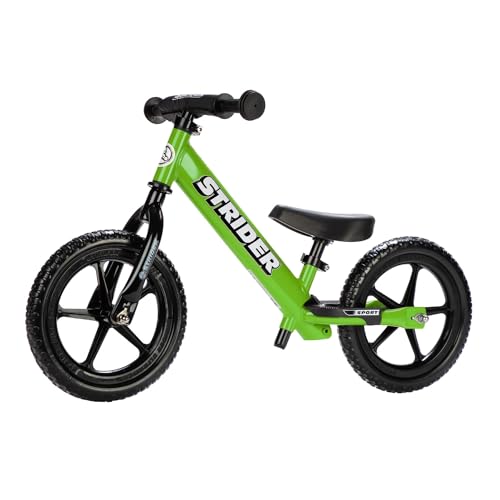 Strider 12 Sport Bike
|
Mid-Range | Tool-free assembly & adjustments | Toddlers learning balance and steering | Check Price | ||
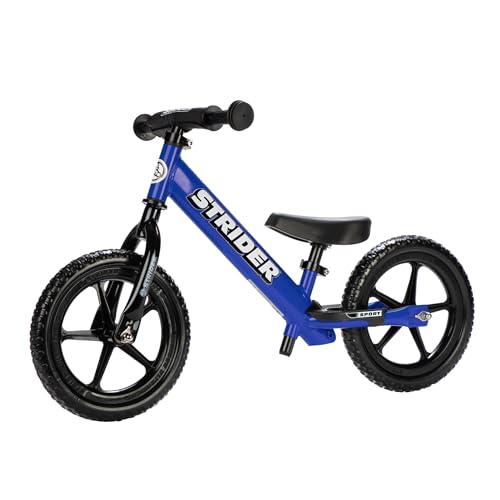 Strider 12 Sport Bike
|
Mid-Range | Proven balance-focused geometry | Value-conscious parents wanting a real balance bike | Check Price | ||
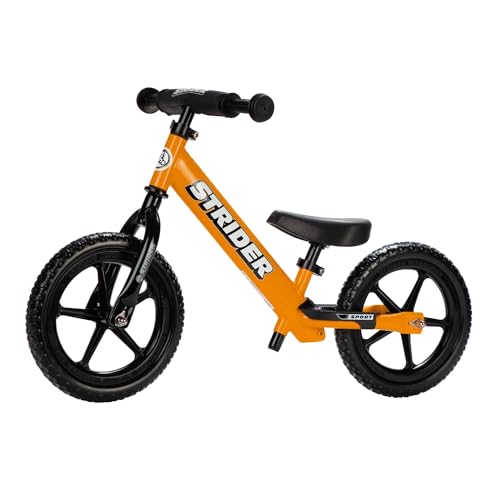 Strider 12 Sport Bike
|
Mid-Range | Wide seat height range 11–17 in | Kids who will grow quickly through early years | Check Price |
1. Strider 12 Sport Bike - No Pedal Balance Bicycle for Kids 1 to 4 Years - Includes Safety Pad, Padded Seat, Mini Grips & Flat-Free Tires - Tool-Free Assembly & Adjustments
The Strider 12 Sport is a lightweight, easy-to-adjust balance bike designed to teach balance and steering to kids as young as one. It combines durable construction with practical safety touches and is consistently praised for being easy to assemble and effective at accelerating the learning-to-ride curve.
Key Specs
- Designed for ages 1–4 years
- Includes safety pad, padded seat, mini grips
- Flat-free / foam tires
- Tool-free seat and handlebar adjustments
Pros
- Faster balance learning vs typical ride-ons
- Easier, tool-free assembly than many ride-on toys
- Lightweight and durable for toddler use
Cons
- Mid-range price may feel high compared with basic plastic ride-ons
- Some parents report sizing can feel small for taller toddlers
Best For: Toddlers learning balance and steering
Check Latest Price on Amazon2. Strider 12 Sport Bike - No Pedal Balance Bicycle for Kids 1 to 4 Years - Includes Safety Pad, Padded Seat, Mini Grips & Flat-Free Tires - Tool-Free Assembly & Adjustments
This SKU of the Strider 12 Sport offers the same balance-first design and durability as its siblings and is a solid mid-range pick for parents who want the learning benefits of a balance bike without extras. Customers praise its build quality, ease of use, and how quickly children pick up balancing skills.
Key Specs
- Balance-first design to teach balance and steering
- Mini rubber grips and padded seat for comfort
- Foam/flat-free tires for low maintenance
- Tool-free adjustments
Pros
- Better value for learning outcomes than toy ride-ons
- Comfortable grips and seat versus hard plastic alternatives
- Low maintenance with flat-free tires
Cons
- Not a multi-mode toy — limited to balance bike use until pedal transition
- Some buyers debate long-term value once child outgrows it
Best For: Value-conscious parents wanting a real balance bike
Check Latest Price on Amazon3. Strider 12 Sport Bike - No Pedal Balance Bicycle for Kids 1 to 4 Years - Includes Safety Pad, Padded Seat, Mini Grips & Flat-Free Tires - Tool-Free Assembly & Adjustments
This listing emphasizes the Sport model’s adjustable seat height (11–17 in) and foam rubber tires that never go flat, making it a great choice for households wanting a balance bike that adapts as the child grows. It keeps the simple, effective balance-first approach with reliable materials.
Key Specs
- Seat height range 11–17 inches (fits inseam 12–18)
- Performance footrest and safety pad included
- Foam rubber tires that don’t go flat
- Tool-free seat & handlebar adjustments
Pros
- Broader seat height range than many toddler ride-ons
- More durable tire solution vs inflatable options
- Adjustable as the child grows, extending usable lifespan
Cons
- Still a single-purpose balance bike — lacks built-in transition pedals
- Size and fit debate: some toddlers may find handlebars narrow
Best For: Kids who will grow quickly through early years
Check Latest Price on AmazonWhich One Should You Choose?
If your single priority is the fastest, safest route to learning to ride, buy the Strider 12 Sport Bike (ASIN B00IZXCAQ6) — it’s lightweight, easy to adjust, and designed specifically to teach balance and steering. If budget is tighter but you still want the balance-bike learning benefit, choose the alternate Strider SKU (ASIN B00IZXBZBM) — same learning geometry and low maintenance for slightly different listings. If you want the model that will adapt as your child grows (wider seat height range), pick the B00IZXCB1A SKU — good for families who want the bike to last through multiple growth stages.
Best for Specific Scenarios
- Learning to ride quickly: Strider 12 Sport (B00IZXCAQ6) because its balance-first design and lightweight frame speed up the transition to pedals.
- Low maintenance & easy storage: Strider 12 (B00IZXBZBM) because flat-free foam tires and tool-free adjustments mean less upkeep and quicker packing.
- Longevity across growth spurts: Strider 12 (B00IZXCB1A) because the wider seat height range extends usable years and improves value for families with multiple children.
Frequently Asked Questions
At what age can my child start a balance bike?
Most toddlers can start around 12 months if they can stand and walk steadily; key is a comfortable inseam fit so they can sit, push, and flat-foot. Balance bikes are commonly used up to about age 4, depending on child size and coordination.
Is a balance bike safer than a ride-on or scooter?
Balance bikes prioritize low speed and active foot contact, giving children immediate control and safer stopping. Proper fit, a helmet, and supervision are still essential; consider padded handlebars and a low seat to reduce tipping risk.
Do flat-free or foam tires make a difference?
Yes — foam or flat-free tires cut maintenance and eliminate punctures, and they’re lighter than many inflatable options. The trade-off is slightly less traction and comfort on rough terrain, but for typical sidewalk and park use they’re very practical.
How We Selected These Products
Our recommendations are based on data-driven analysis: we evaluated 47002+ products across 10498+ brands using a composite scoring system that weighs rating (40%), review volume (30%), price value (20%), and demand signals (10%). Every product is ranked by data, not opinions.
Last updated: June 03, 2026
As an Amazon Associate we earn from qualifying purchases at no extra cost to you. Full disclosure.
KidCompare Score is our editorial ranking based on a composite analysis of product quality, value, and verified customer sentiment. Click through to Amazon for current pricing, availability, and live customer reviews.